From A Pivot to Breakthrough: Inside Lightholm’s Comeback
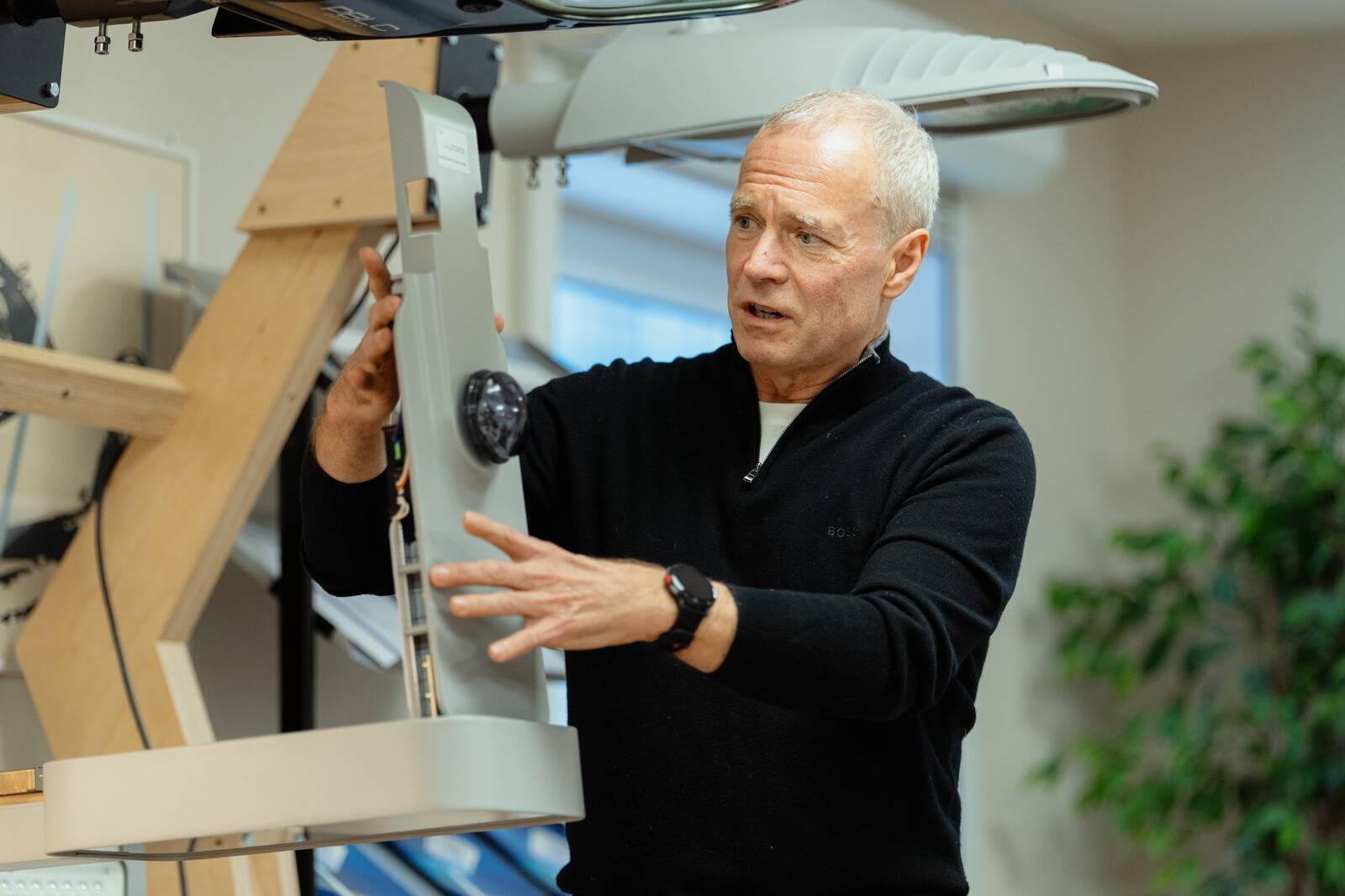
“Here, we are fulfilling God’s will,” says Sven Aabreldaal. And there was light. Quite literally: luminaires are exactly what Aabreldaal’s new brand Lightholm produces — and far more of that light shines abroad than in Estonia. “Too foreign for our own, but our own for foreigners,” Sven remarks.
Pedrobeat AS, the business entity behind the Lightholm brand, has moved from one physical wavelength to another: before light, there was sound. Sven Aabreldaal’s name is likely familiar to the music scene, as the playfully named Pedrobeat has been distributing sound carriers in Estonia since the 1990s — CDs, cassettes, vinyl records, and everything in between.
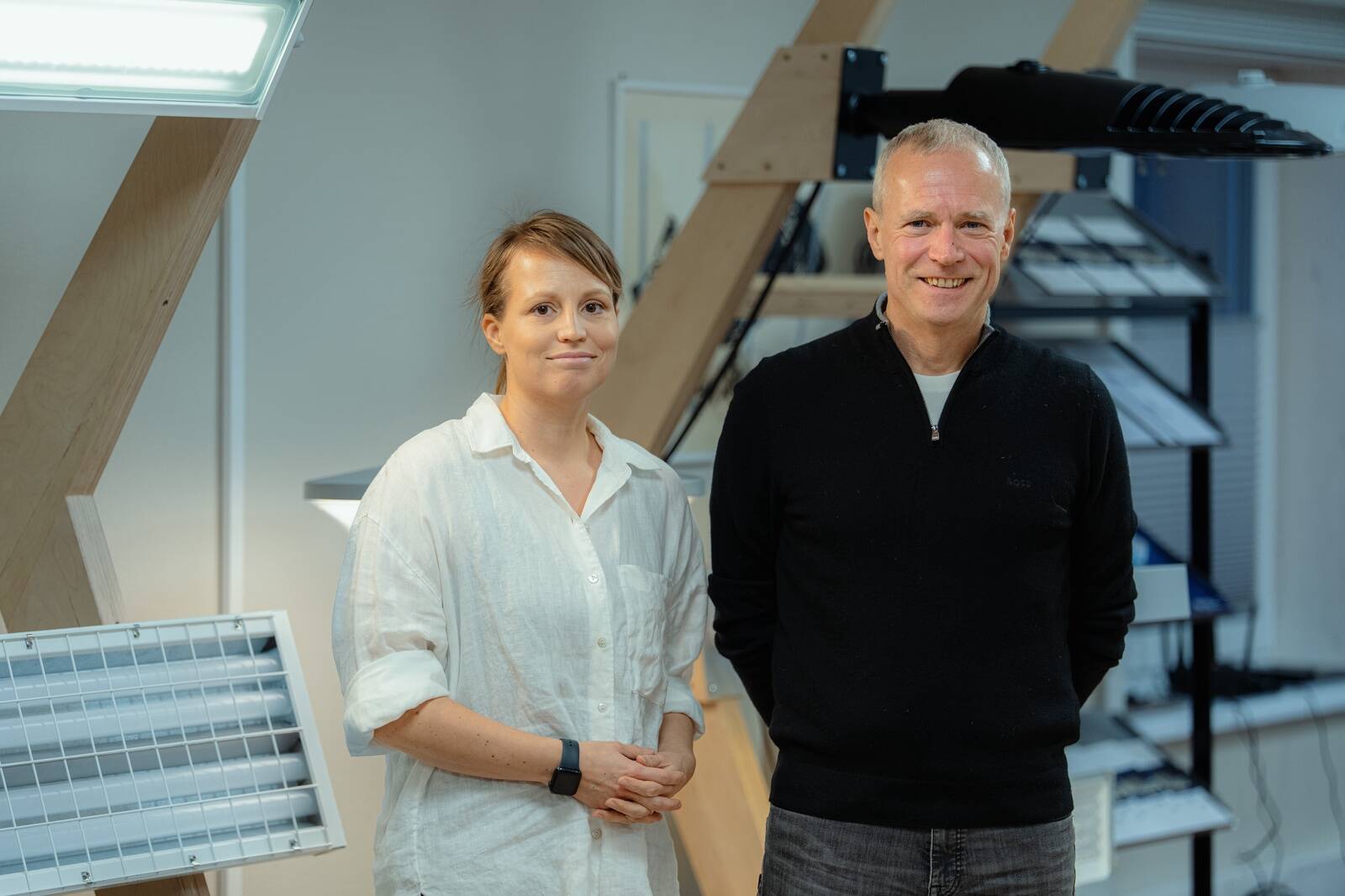
“Our office is as long as a Moscow train,” Sven jokes after his daughter, company CEO Grethel Aabreldaal, has completed the introductory tour. We really do move in a straight line from one end of the elongated building to the other, like passing through train carriages. In the rear carriage, there are mountains of parallel activity: stacks and boxes of music records.
In the locomotive, however, lies our main interest: along the wall are lighting fixtures that illuminate streets, sports fields, mines, and factories. Sven recalls that the music business was profitable until the 2008 financial crisis — and shortly after, major record labels opened their own offices in Estonia, changing the rules of the game.
“The business disappeared. For me, business means you make a profit and can pay salaries. If you have to take a loan just to pay wages, that’s no longer a business,” Sven states pragmatically.
Entering the World of Light
The turn toward lighting happened in 2013, when Sven’s long-time Latvian partner Andris, who had moved to Sweden, introduced him to a new and energy-efficient field. Sven saw potential: it was green, sustainable, and long-term. “All the right boxes were ticked,” he says.
LED lighting had not yet fully taken hold in Estonia, so it was possible to jump aboard before the train reached full speed. Since then, the company has grown from a lighting reseller into a high-end manufacturer, now exporting 98% of its production.
In August 2019, the company faced a critical crossroads. They had a major Swedish client whose orders were pending, but the factory that was supposed to manufacture the products went bankrupt. The choice was simple: lose the client or start manufacturing themselves. Lightholm chose the latter.
“I think we set some kind of world record in starting a factory. It took us half a year to get production running,” Sven says. “There are processes that simply take time. Our luminaire housings are made of aluminum, and producing the molds alone takes two to three months. After that, adjustments may still be needed. We were lucky to find partners quickly,” he explains.
Today, their 1,200–1,400 m² production facility is located in Latvia, where they also operate a certified laboratory. “That’s an additional income stream. We offer photometric testing for lighting fixtures — measuring their performance in real conditions,” Sven says. While manufacturing takes place in Latvia, product development and management are jointly handled in Estonia, Sweden, and Latvia.
Product Development as Tailoring
Lightholm does not yet aim to compete with mass production. Their competitive advantage lies in small and custom orders. While giants like Philips typically require minimum orders of 5,000 units for specialized solutions, Lightholm is willing to develop and deliver just a few dozen custom luminaires.
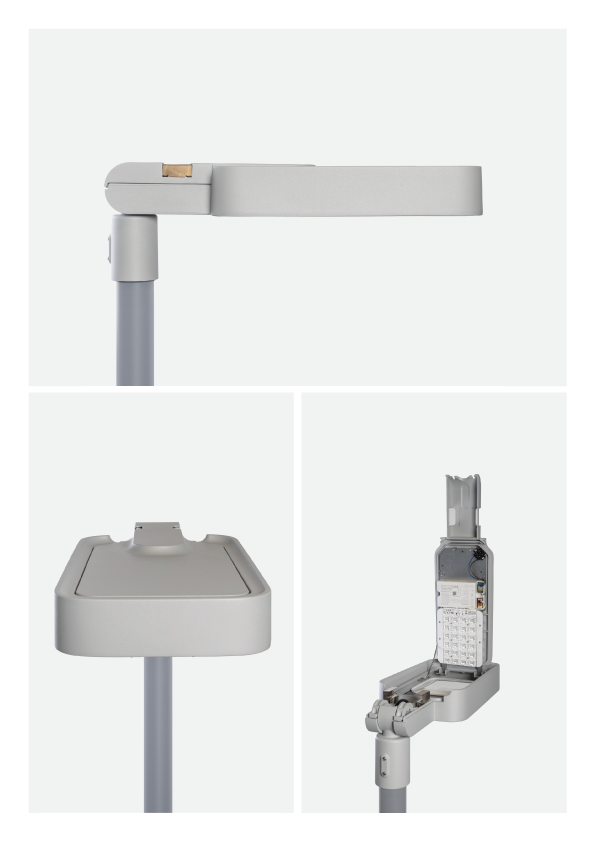
Their flagship product is the Geo luminaire, which took four years to develop. It is a technological gem with exceptionally simple maintenance: replacing the lighting module takes less than 10 seconds — without even switching off the electricity.
Grethel suggests that the author try replacing the module. I do. Fingers intact. Success. “See — when you run out of things to write about, your next job is lined up,” the CEO laughs. These very lamps illuminate other countries, where Lightholm has won public tenders through partners. But why not Estonia?
“Making friends with the domestic market has been rocky,” Sven admits. One reason may lie in differences between Estonian and Swedish procurement systems. “The Estonian market is usually built around the lowest price,” Sven explains. Another factor is labor cost. “In Scandinavia, if you put a cheap, low-quality luminaire on a pole, the gentleman who has to maintain it is so expensive that the maintenance alone can cost several times the price of the lamp. In Estonia, it’s the opposite.”
How long will we continue building ourselves into the cheapest possible country, he wonders. “We may find it easier to replace lower-quality luminaires more often — or at least it’s less economically painful,” Grethel adds.
In Scandinavia, they say that if replacing a luminaire module takes more than five minutes, there’s no point in even starting the conversation. As noted, with Lightholm, we’re talking seconds. In Scandinavia, procurement decisions tend to assess the price–quality relationship far more holistically.
“The first street-lighting tender we won there was in 2014,” Sven recalls. “We were definitely not the cheapest bidder. The fixtures we delivered then had a three-year warranty. Last year, I asked our Swedish partner whether they had replaced them with newer models. The answer was no — they’re still working. Today, we offer a warranty of seven-plus years.”
Warranty depends on components. “For example, the lenses are plastic, which in theory could last a hundred years. The LED chips underneath have a rated lifespan of 100,000 hours. In Estonia, streetlights operate about 4,000 hours per year,” Sven explains. A quick calculation suggests those chips could function for 25 years without issue.“And the luminaire doesn’t just stop working — it loses maybe 10% of its quality, which the human eye might not even notice,” Sven adds.
Light, Humans, and Rhythm
Artificial light has undoubtedly disrupted our circadian rhythms, but modern solutions aim to address this more intelligently. While living entirely by nature’s rhythm is no longer possible, there is growing awareness that not all light is the same.
Grethel and Sven explain that street lighting should illuminate life with softness, so that in the evening, a biological being understands it’s time to rest. “But what if that light shines into your bedroom? That’s why street lighting must be directed onto the street — not into apartment windows,” Grethel explains.
In offices and factories, overly pragmatic choices are often made: cheap lights, because light is “just” light. “If you install a yellow light in an office, people yawn more. Install daylight-spectrum lighting, and you’ll spend less money on coffee beans,” Sven says. Cheaper industrial luminaires can also produce an invisible stroboscopic effect that still exhausts people. “Lightholm does not produce strobe,” he adds firmly.
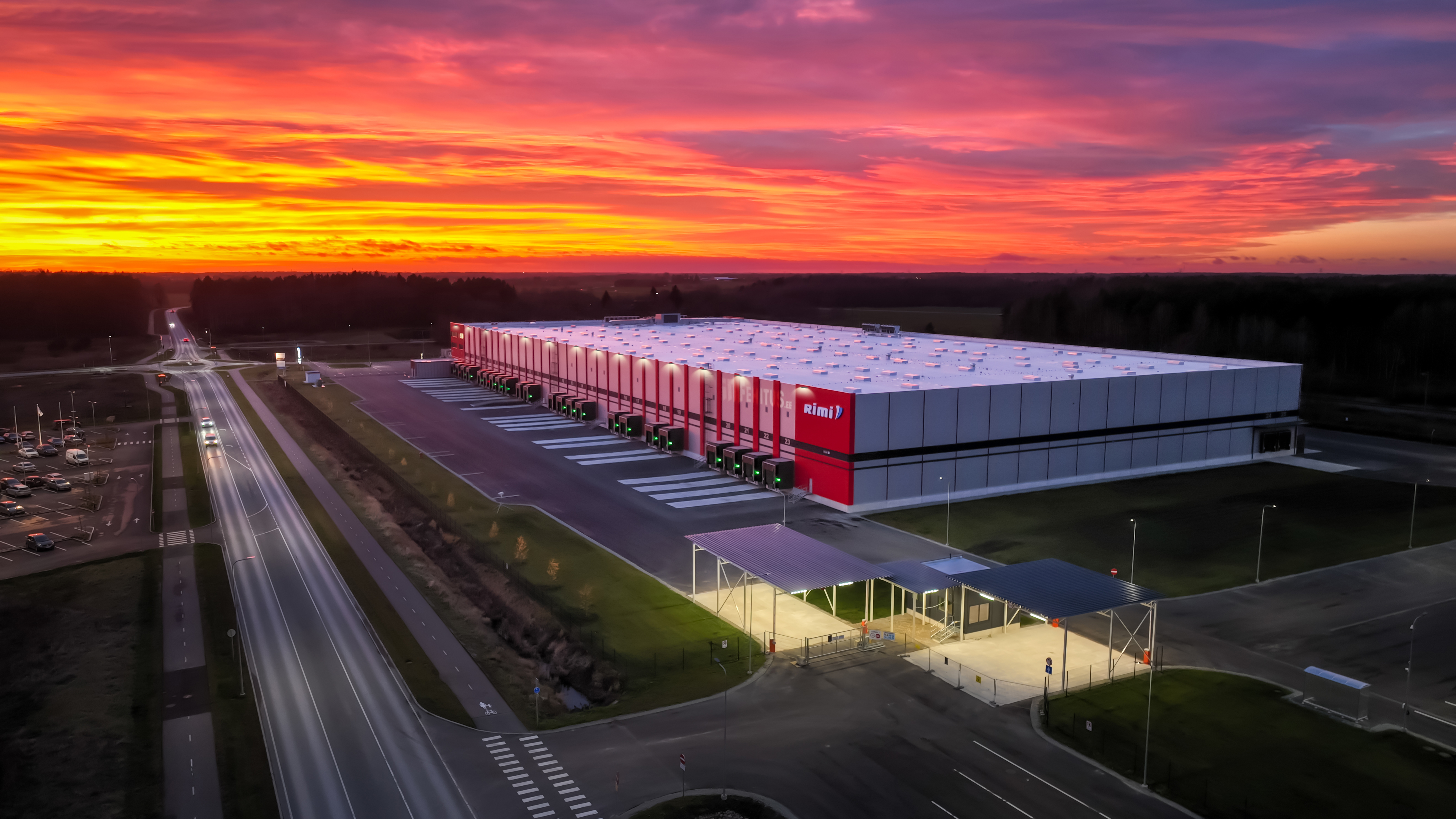
Beyond Scandinavia, Lightholm has entered or established itself in France (having won a railway tender), the Netherlands, Belgium, and Iceland. In cooperation with ABB, they have illuminated sites in Armenia, Dubai, and even Iran, under challenging conditions.
They also manufacture lighting for sports fields, industrial facilities, mines, and livestock farms. “Animal farming has its own nuances,” Sven explains. “Animals do their number one and number two in the same space. That produces ammonia, and ordinary plastic luminaires would degrade quickly in such an environment.”
“Our next target is explosion-proof lighting,” Sven continues. “For example, on oil platforms there are dangerous situations to consider. In a fire, a lamp should melt — not explode into fragments and injure someone.” These niche solutions are precisely what give them a competitive edge.
Home Market and Bureaucratic Obstacles
A painful topic in Estonia is bureaucracy. For years, public tenders required the ENEC+ certificate, which isn’t even demanded in neighbouring Latvia, Finland or Sweden — and would have cost a small company €30,000. “We had ENEC, but the ‘plus’ meant an Estonian company couldn’t participate — while a Latvian one could,” Sven notes.
Even more curious is the requirement that a luminaire must first be registered with the Finnish Road Administration before it can even be considered in Estonia. Fortunately, the world is large — and there is room for new, sustainable technology.
“We were on holiday in Madeira over Christmas, and I literally had tears in my eyes when I saw tunnels without LED lighting. The entire mountain was lit with last-generation technology. And you start wondering: how do you find the person responsible for this?” Sven recalls.
But you were on vacation? “It’s like music,” he laughs. “You go to a pub, a band is playing, and the drummer can’t keep time — you notice immediately. Professional deformity.” “I don’t even need to leave Estonia. Near my home, there’s a schoolyard with 100 lighting poles that aren’t LED, and the state pays huge sums for them. As a taxpayer, I see waste,” Sven says.
The Aabredaal family hints that they already have the capacity to scale production severalfold. Their recent brand renewal — adopting the name Lightholm — reflects a Scandinavian approach. “‘Holm’ means island in Swedish, and I liked the idea of an island of light,” Sven says. Previously, they operated as PBLC – Pedrobeat Lighting Company, but it was time to separate the music and lighting brands.
A Note on the Music Business
Sven’s music business — selling vinyl and CDs — still exists independently. It once seemed that the era of physical media was ending. Then COVID happened.“In February of the first COVID year, our turnover was close to zero. At first, we thought we were done. But then people were locked at home — watching films, reading books, listening to music — and our sales skyrocketed,” Sven recalls.
The main change was that before COVID, CDs were the top seller; post-COVID, vinyl records took first place. “People love the emotion. In Soviet times, not a single crackle was allowed on a fragile record. Today, people crave that crackling sound,” Sven laughs — noting that while the rear carriage remains, Pedrobeat is likely still number one in music distribution in Estonia.
The article was originally published in the leading business outlet Äripäev.