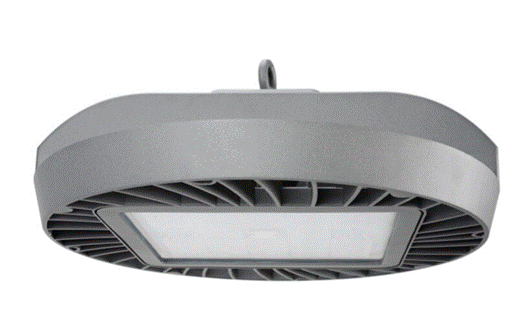
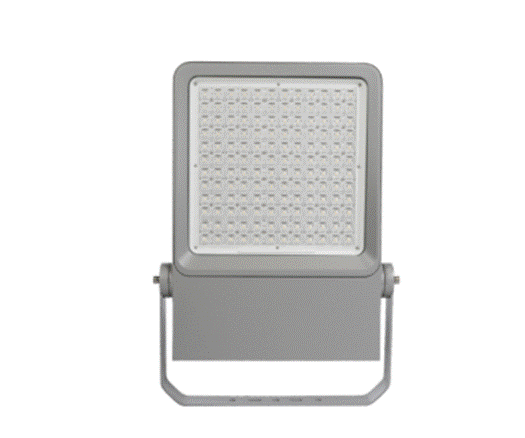
Author: Ave Keenan

Lighting a 1,600-Tonne Giant: LED Floodlights for Dragline Excavators

Lightholm floodlights are installed in Estonia’s largest oil shale open-pit mines, where the rock is excavated by dragline excavators, also called walking excavators – some of the largest mobile machines in the world. Mining lighting for their working area is an engineering task of its own, and an ordinary LED floodlight is not up to it.

Dragline excavator lit by LED floodlights at night in an oil shale open-pit mine

The giant in numbers: the EŠ 15/90 dragline

  • Weighs more than 1,610 tonnes
  • About the size of a three-storey apartment building
  • 90-metre boom
  • 15 m³ bucket – big enough to hold an average car
  • Lifting capacity of more than 40 tonnes
  • The bucket is moved by a system of ropes, hence the name dragline

How it works

The machine runs on 6 kV AC, fed through heavy supply cables. Its motors, however, run on DC: the dragline converts high-voltage AC into controllable DC using either an on-board motor-generator set or thyristor converters. Two 680 kW motors hoist the bucket, and 280 kW motors move the machine.

How the mammoth moves

The excavator moves on two large “feet” that are lifted and lowered in turn, so the machine literally walks. Its top speed is about 200 metres per hour – at that pace, travelling from Tallinn to Narva would take a month and a half. So it is a dragline, not a drag race. In practice a machine like this never travels by road: it is delivered in parts and assembled on site over several months.

Why standard floodlights fail on a dragline

Dragline working areas were traditionally lit with metal halide floodlights, which had clear weaknesses:

  • Vibration and shock: bulbs and fixings cannot cope with constant shaking.
  • Voltage fluctuations: starting the large motors to swing, walk and hoist causes sharp changes in the supply, and the lamp goes out. On a working excavator this happens all the time.
  • Slow start: full brightness takes several minutes.
  • No hot restrike: after going out, the lamp must cool down before it can be switched on again.
  • The result is downtime: working in the dark among hundreds of tonnes of moving steel is not safe.

On top of that, mining lighting must withstand dust, moisture, rain, winter frost and summer heat. The floodlights sit high up on the machine, so every replacement costs time and working hours. And the light must reach far into the working area rather than spread out.

Our solution: the FL181 300W ON heavy duty LED floodlight

The FL181 300W ON is an LED floodlight built for the extreme conditions a dragline faces every day.
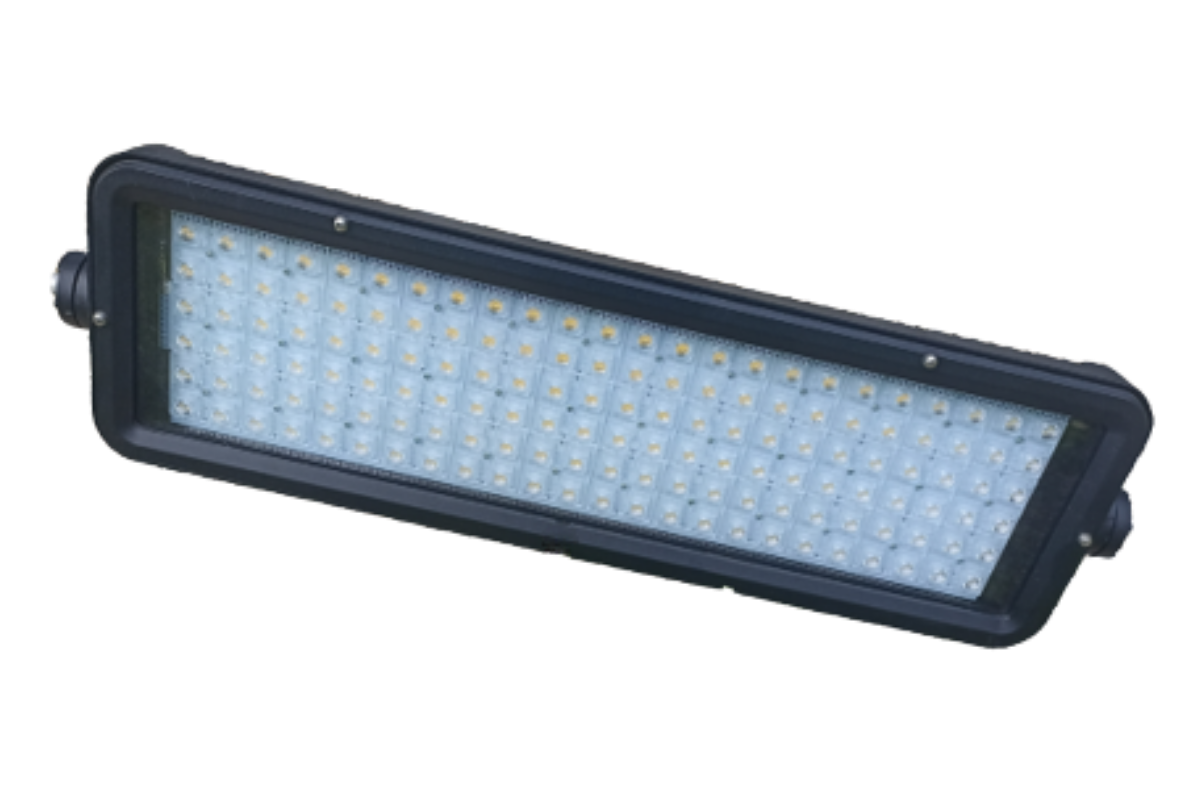
FL181 300W ON heavy duty LED floodlight for mining lighting
  • Vibration resistant design: the screws holding the LED module, optics, driver and housing are secured with thread-locking adhesive so vibration cannot loosen them.
  • Handles voltage fluctuations: the driver works on 90–305 VAC input and has built-in surge protection (DM 6 kV, CM 10 kV).
  • Instant start: full brightness immediately, even after a power interruption, with no cooling or waiting time.
  • Light where it is needed: narrow-beam ON optics and a 40,000 lm luminous flux.
  • Robust housing: ADC12 die-cast aluminium, 5 mm tempered glass, stainless steel bolts and a metal mounting bracket.
Technical dataFL181 300W ON
Power300 W
Luminous flux40,000 lm
Colour temperature4000 K
OpticsNarrow-beam ON optics
ProtectionIP66, IK08
Operating temperature−40 to +45 °C
Lifetime70,000 hours (25 °C)
Input voltage90–305 VAC, 47–63 Hz
Surge protectionDM 6 kV, CM 10 kV
Corrosion classC3
Dimming1–10 V / 10 V PWM

Mining lighting for heavy machinery across Europe

The same challenges – vibration, voltage fluctuations, dust and difficult maintenance access – apply in open-pit mines and quarries throughout Europe. The FL181 is also suitable for:

  • bucket-wheel excavators and mining shovels
  • crushers, conveyors and screening plants
  • port cranes and other heavy machinery exposed to vibration
  • general lighting of open pits, quarries and stockyards

Frequently asked questions

Why use LED floodlights instead of metal halide in a mine?

LED floodlights start instantly at full brightness, even after a power interruption, withstand vibration and need far fewer replacements.

Can the FL181 handle voltage fluctuations?

Yes. The driver works on 90–305 VAC input and has built-in surge protection (DM 6 kV, CM 10 kV).

Can the floodlight be adapted to our machines?

Yes. Mounting, cable length and optics are chosen for each site, and we provide a lighting calculation.

The result

Our floodlights have been working in Estonian oil shale mines for more than five years. That gives us validated feedback from real conditions on the reliability and lifetime of the design. Where cheap floodlights give up, ours keep working night after night.

Does your site face vibration, dust or voltage fluctuations? Contact us – we will help you choose the right floodlight and make a lighting calculation.

Paint Booth Lighting: How to Choose the Right Luminaire

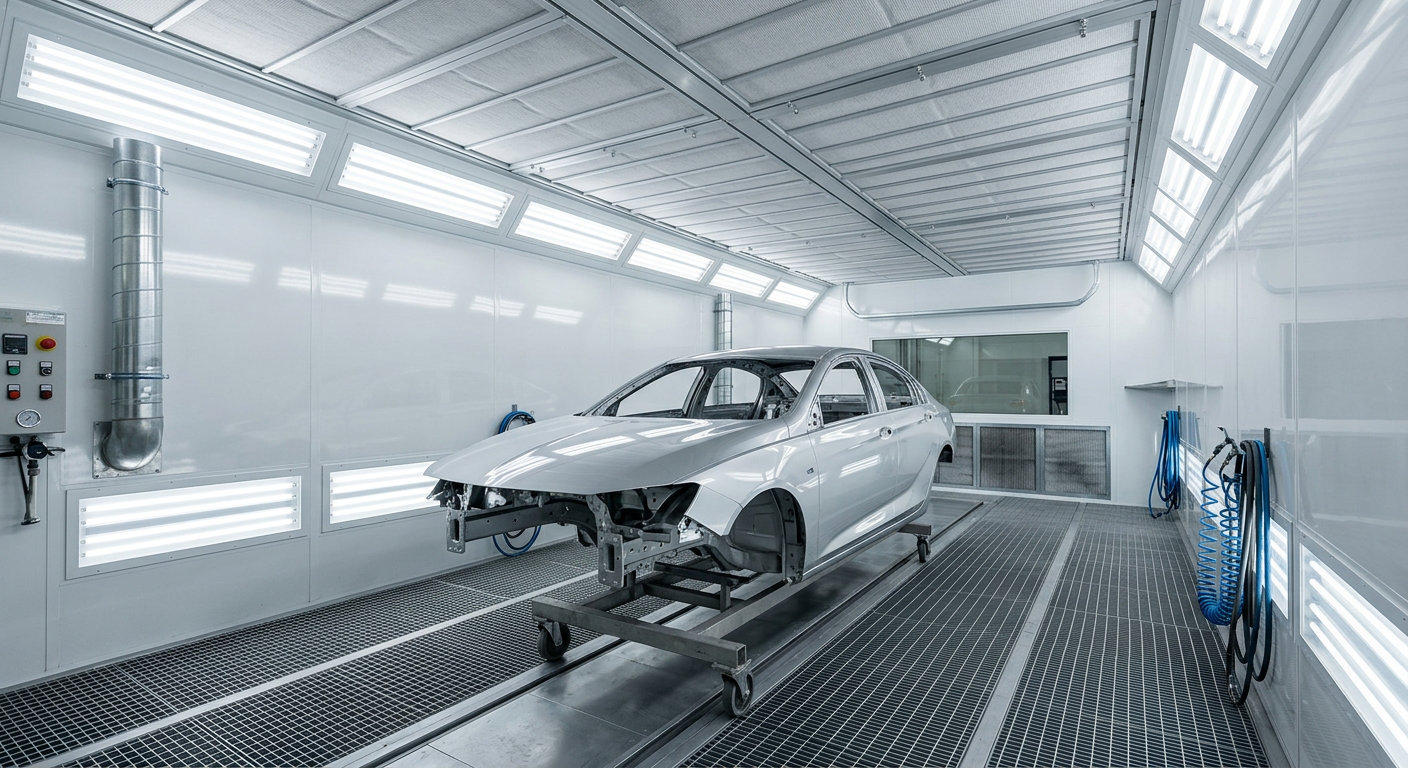
LED paint booth lighting with ceiling and wall luminaires in an automotive spray booth

Paint booth lighting has two jobs: let the painter see every run, orange-peel texture and colour deviation, and do it safely in an atmosphere full of flammable solvent vapour or powder. Get either wrong and the cost shows up as rework, rejected parts or a safety incident.

This guide covers what to look for when specifying luminaires for a spray booth, paint mixing room or powder coating line: certification, colour quality, light levels, placement and durability.

1. Safety first: ATEX-certified luminaires

A paint booth is a potentially explosive atmosphere. In the EU, any luminaire installed there must comply with the ATEX Equipment Directive 2014/34/EU and be rated for the zone it sits in. The zone classification comes from the site’s explosion risk assessment, not from the lighting supplier.

ZoneAtmosphereTypical location in a paint shop
Zone 1Solvent vapour likely during normal operationInside a liquid spray booth during spraying
Zone 2Solvent vapour unlikely, short duration onlyAround booth openings, mixing rooms, flash-off areas
Zone 21Combustible dust likely during normal operationInside a powder coating booth
Zone 22Combustible dust unlikely, short duration onlyAround powder booths and recovery units

Check three things on the luminaire marking:

  • Equipment category and zone – category 2 for Zone 1/21, category 3 for Zone 2/22.
  • Gas group and temperature class – most paint solvents require IIA or IIB, and a temperature class (e.g. T4) below the ignition temperature of the solvents used.
  • Dust marking – for powder coating, a maximum surface temperature (e.g. T85 °C) below the powder’s ignition temperature.

Outside the EU, the equivalents are IECEx and, in North America, Class I Division 1/2 under NFPA 33. Read more about ATEX lighting.

2. Colour quality: CRI and colour temperature

A painter judges colour match by eye. Poor colour rendering hides metamerism – two paints that look identical under the booth lights but different in daylight – and the defect is only found after delivery.

  • Colour rendering index (CRI): Ra 90 or higher for colour matching and final inspection. Ra 80 is the minimum for general spraying. Check R9 (saturated red) as well; low R9 makes reds and warm tones look dull.
  • Colour temperature: 5000–6500 K. This range approximates daylight (D50–D65), the reference used for colour assessment in automotive and industrial finishing.
  • Consistency: all luminaires in the booth should share the same CCT and binning. Mixed colour temperatures create visible shifts across a panel.
  • Flicker-free drivers: flicker causes eye strain over long shifts and can distort how metallic and pearl finishes appear.

3. Light levels and uniformity

EN 12464-1 sets the baseline for indoor workplaces. In practice, most paint booths are designed well above it, because defects such as dust nibs, sags and dry spray are easier to catch under higher illuminance.

TaskRecommended maintained illuminanceMinimum CRI
Spraying, general booth work750–1000 lxRa 80
Touch-up, colour matching, inspection1000–2000 lxRa 90
Automotive refinish and high-gloss finishing1500 lx and aboveRa 90

Illuminance alone is not enough:

  • Vertical illuminance matters as much as horizontal. Car doors, cabinet sides and machine housings are vertical surfaces, and ceiling-only lighting leaves them underlit.
  • Uniformity (Emin/Eavg) should be high – 0.7 or better on the work zone – so the painter does not move between bright and dark patches.
  • Glare control through diffusers or optics prevents reflections off wet, glossy surfaces from masking defects.

4. Placement: ceiling and wall layout

The best paint booth lighting layouts combine overhead and side lighting so light reaches the workpiece from several angles.

  • Ceiling rows run parallel to the length of the booth, along the edges of the filter ceiling, to provide general illumination without blocking airflow.
  • Upper wall luminaires angled at roughly 45° light the upper sides of the workpiece and reveal surface texture.
  • Lower wall luminaires cover the bottom third – sills, bumpers, lower panels – which ceiling lighting misses.
  • Behind-glass mounting is common in booth construction: luminaires sit in sealed light boxes behind tempered glass panels. This keeps fittings out of direct overspray and simplifies cleaning, but the zone classification behind the glass must still be confirmed.
  • Slim, smooth housings reduce turbulence in the downdraft or crossdraft airflow, which affects both finish quality and overspray extraction.

5. Durability, cleaning and maintenance

A paint booth is hard on equipment. Overspray settles on every surface, booths are cleaned with solvents, and combination spray-and-bake booths cycle up to 60–80 °C during curing.

  • Ingress protection: IP65 or higher, so dust, overspray and cleaning water cannot enter the luminaire.
  • Chemical resistance: tempered glass covers withstand solvents and cleaning agents better than standard polycarbonate, which can craze or yellow. Gaskets should be solvent-resistant.
  • Ambient temperature rating: confirm the luminaire is rated for the booth’s bake temperature, not only room temperature.
  • Smooth, cleanable surfaces: fewer ledges and crevices mean less overspray build-up and faster cleaning. Peelable protective films on covers extend cleaning intervals.
  • Long LED lifetime: L80 or L90 ratings of 50,000+ hours reduce the number of maintenance interventions that require the booth to be shut down and the area made safe.
  • Energy: replacing fluorescent tubes with LED typically cuts lighting energy use by half or more, and LED reaches full output instantly with no warm-up.

Paint booth lighting checklist

  1. ATEX (or IECEx / NFPA 33) certification matching the booth’s zone, gas group and temperature class
  2. CRI Ra 90+ with strong R9 for colour-critical work
  3. 5000–6500 K, consistent across all luminaires
  4. 1000–2000 lx on the work zone, with good vertical illuminance and uniformity
  5. Ceiling plus upper and lower wall luminaires
  6. IP65+, solvent-resistant glass and gaskets, rated for bake temperatures
  7. Flicker-free drivers and long LED lifetime

Lighting for paint booths from Lightholm

Lightholm designs and manufactures industrial LED luminaires in Tallinn, Estonia, including ATEX-certified fittings for hazardous areas such as STEEL X ATEX. Because we build to order, luminaires can be configured for a specific booth – colour temperature, CRI, optics, mounting and certification – and delivered faster than standard catalogue lead times from larger manufacturers.

Planning a new paint booth or upgrading an old one? Send us the booth dimensions and zone classification, and our team will propose a layout and luminaire specification. Contact Lightholm.

HACCP-sertifikaadiga valgustid: ohutu valgus toiduohutuse teenistuses

Toiduainetööstuse töötajad tootmisliini ääres HACCP-nõuetele vastava valgustusega

Toiduainetööstuses on valgusti osa toiduohutusest, mitte ainult valgusallikas. Purunenud kate tootmisliini kohal, tolmu koguv korpus või pesuvett läbi laskev tihend võib tähendada saastunud partiid, tagasikutsumist ja mittevastavust auditil.

Seepärast otsivad toiduettevõtted, köögid ja külmladude haldajad valgusteid, mille sobivust toiduga kokkupuutuvasse keskkonda kinnitab HACCP-sertifikaat. Selles postituses selgitame, mida see sertifikaat tähendab, milliseid tehnilisi nõudeid valgusti peab täitma ja kuidas valida ettevõttele sobiv lahendus.

Mis on HACCP ja mida tähendab HACCP-sertifikaat valgustile?

HACCP-sertifikaat tähendab, et sõltumatu asutus on hinnanud valgustit HACCP-põhimõtete alusel ja kinnitanud, et see sobib toidukäitlemise ruumidesse.

HACCP (Hazard Analysis and Critical Control Points ehk ohutegurite analüüs ja kriitilised kontrollpunktid) on rahvusvaheliselt tunnustatud toiduohutuse juhtimise süsteem. ELis tuleneb kohustus rakendada HACCP-põhimõtteid määrusest (EÜ) nr 852/2004. Neile põhimõtetele tuginevad ka IFS Food, BRCGS ja ISO 22000.

HACCP on ettevõtte protsess, mitte toote omadus. Valgusti hindamisel vaadatakse:

  • hügieenilist disaini ja materjale;
  • puhastatavust;
  • kaitset kahjurite ja mustuse sissepääsu eest;
  • saastumisriski nii tavakasutusel kui ka purunemise korral.

Sertifitseeritud valgusti lihtsustab ettevõtte HACCP-plaani koostamist ja auditeerimist, sest valgustuse sobivus on juba dokumenteeritud.

Milliseid nõudeid HACCP-valgusti täidab?

Toiduruumi valgusti peab jääma ohutuks ka siis, kui see saab löögi, seda pestakse kõrgsurvega või see töötab aastaid niiskes ja külmas.

Purunemiskindlus. Avatud toiduga aladel ei tohi valgustist kukkuda klaasi- ega plastikilde. Seetõttu eelistatakse polükarbonaatkatet ja löögikindlust IK10 (talub 20 J lööki). Klaasist osi tuleb vältida või peavad need olema killustumiskindlad.

Tolmu- ja veekindlus (IP-klass). Tootmisaladel on miinimum üldjuhul IP65, märgpesuga aladel IP66–IP67 ning kõrgsurve- ja kuumaveepesu korral IP69.

Hügieeniline disain. Pind on sile ja poorideta, ilma pragude ja vuukideta. Nurgad on suure raadiusega ja horisontaalseid pindu, kuhu tolm ja putukad kogunevad, on võimalikult vähe. Valgusti on tihendatud nii, et kahjurid sisse ei pääse, ning sellel ei ole lahtiseid kruve ega klambreid.

Keemiline vastupidavus. Korpus ja tihendid peavad taluma igapäevast pesu desinfitseerimisvahenditega, aurupuhastust ja temperatuurimuutusi.

Valguse kvaliteet. Toidutöötlemisaladel peaks valgustatus olema vähemalt 200 lx ja kontrollaladel 500–750 lx. Värvide õigeks hindamiseks soovitatakse värviedastusindeksit (CRI) vähemalt 80, kvaliteedikontrollis 90 või rohkem.

Kus HACCP-valgusteid kasutada?

HACCP-sertifikaadiga valgusti sobib kõikjale, kus toitu toodetakse, pakendatakse, hoitakse või valmistatakse:

  • liha-, kala- ja piimatööstus: igapäevane märgpesu ja tugevatoimelised puhastusvahendid;
  • pagari- ja kondiitritööstus: jahutolm ja kuumus;
  • joogitootmine ja villimisliinid: niiskus ja pritsmed;
  • suurköögid ja toitlustus: aur, rasv ja sage puhastamine;
  • külmlaod ja külmkambrid: madal temperatuur ja kondensaat;
  • toiduainete logistikakeskused ja laod: suur paigalduskõrgus ja tõstukite löögioht.

Kuidas valida HACCP-valgustit? Kontrollnimekiri

Enne ostu tasub läbi käia järgmised küsimused.

  1. Kas tootel on kehtiv HACCP-sertifikaat? Küsige sertifikaadi koopiat, sest seda läheb vaja auditil.
  2. Kuidas ruumi puhastatakse? Kuivpuhastus, märgpesu või kuuma veega kõrgsurvepesu määrab vajaliku IP-klassi (IP65 / IP66–IP67 / IP69).
  3. Kas valgustis on klaasi? Avatud toiduga aladel eelistage polükarbonaatkatet ja löögikindlust IK10.
  4. Milline on ruumi temperatuur? Veenduge, et valgusti töötemperatuuri vahemik kataks ka külmkambri või kuuma tootmisala.
  5. Milliseid kemikaale kasutatakse? Kontrollige, kas korpuse ja tihendite materjal sobib teie puhastusvahenditega.
  6. Kui kõrgele valgusti paigaldatakse ja kui palju valgust on vaja? Laske teha valgusarvutus, et töö- ja kontrollaladel oleks piisav valgustatus.
  7. Kui pikk on garantii ja eluiga? Mida harvem tuleb valgustit vahetada, seda vähem on sekkumisi tootmisse.

Lightholmi HACCP-valgustid

Lightholmi tootevalikus on mitu HACCP-nõuetele vastavat tööstusvalgustit niiskete, keemiliselt aktiivsete ja sageli pestavate keskkondade jaoks.

ValgustiIP / IKMaterjalTöötemperatuurValgusvoog / valgusviljakusSobib eriti
STEEL XIP68 / IK10Roostevaba (happekindel) teras−25 … +25 °C4350–10 850 lm, kuni 162 lm/WToidutöötlemistehased, keemiliselt aktiivsed alad
STEEL X ATEX Zone 2IP65 / IK10Roostevaba (happekindel) teras−20 … +40 °C4350–10 850 lm, kuni 162 lm/WPlahvatusohtlikud tsoonid (nt jahu- ja suhkrutolm)
FORNAXIP66 / IK10Polükarbonaat−25 … +50 °C3000–16 500 lm, kuni 180 lm/WNiisked tootmisruumid, pesualad
LINUMIP66 / IK10Polükarbonaat−25 … +50 °C1100–6800 lm, kuni 180 lm/WNiisked tootmisruumid, pesualad

Andmed: Lightholmi tootekataloog ja tootelehed. Kõigi valgustite garantii on 5 aastat.

Vajate abi valikuga? Meie spetsialistid aitavad leida teie tootmisele sobiva valgusti ja teevad valgusarvutuse. Võtke ühendust aadressil sales@lightholm.com.

Lightholm at ONS26: Lighting Built for the Toughest Environments 

Lightholm will be exhibiting at ONS26 — the Offshore Northern Seas exhibition in Stavanger, Norway — taking place 25–28 August 2026. One of the world’s most significant energy events, ONS brings together over 70,000 visitors, 1,100 exhibitors, and representatives from more than 100 countries to discuss the future of energy, from traditional oil and gas to the renewables transition. 

This will be our second consecutive appearance at ONS. We return with the same focus as last time: lighting solutions engineered for industrial environments where safety and reliability are non-negotiable. 

What we’re bringing 

Our main focus at ONS26 will be our ATEX-certified product range — luminaires built specifically for hazardous area applications where explosive gases or vapors may be present. 

The Steel X ATEX Zone 2 will be central to our stand. This is a heavy-duty industrial LED luminaire constructed from high-grade stainless steel, designed for chemically aggressive environments where conventional lighting simply isn’t an option. It carries certified Zone 2 ATEX classification, high IP protection, and is built to handle corrosion, high humidity, and chemical exposure over a long service life — making it a practical fit for offshore platforms, industrial plants, chemical facilities, and similar installations. 

Alongside it, we will be presenting the GEO Floodlight in its upcoming ATEX variant, currently in the final stages of ATEX certification. The GEO FL is a modular outdoor floodlight platform offering up to three independently configurable units, each adjustable for light distribution, mounting height, and environmental conditions. Adding ATEX certification to this platform extends its reach into hazardous area applications where high-output, flexible floodlighting is required. 

Where to find us 

We are exhibiting as part of the Estonian Business and Innovation Agency (EIS) joint stand at ONS26 — Hall 5, Booth 5320. If you are attending the fair and want to discuss your project requirements, meet our team, or get a closer look at our products, we’d be glad to connect. 

You can book a meeting in advance through our contact page. 

Korrosioonikindlus tänavavalgustuses: mida tähendavad C1–C5 (korrosiooniklassid) ja millise valgusti mereäärde valida?

Tänava- ja välisvalgustite valikul on korrosioonikindlus üks olulisemaid, kuid tihti alahinnatud kriteeriume. Eesti pikk rannajoon, niiske kliima ja soolane õhk on valgustitele karm keskkond. Vale materjaliga või pinnakattega valgusti näitab juba mõne aasta pärast roostet, pragunemist või enneaegset riket.

See on oluline teave projekteerijatele, hankespetsialistidele ja rannikualade valgustusprojektide elluviijatele — vale valik tõstab hoolduskulusid ja lühendab kasutusiga. Selles postituses selgitame, mida tähendavad korrosiooniklassid C1–C5, kuidas kaugus merest valikut mõjutab, ning soovitame, millised meie valgustimudelid millisesse keskkonda sobivad.

Mis on korrosiooniklass?

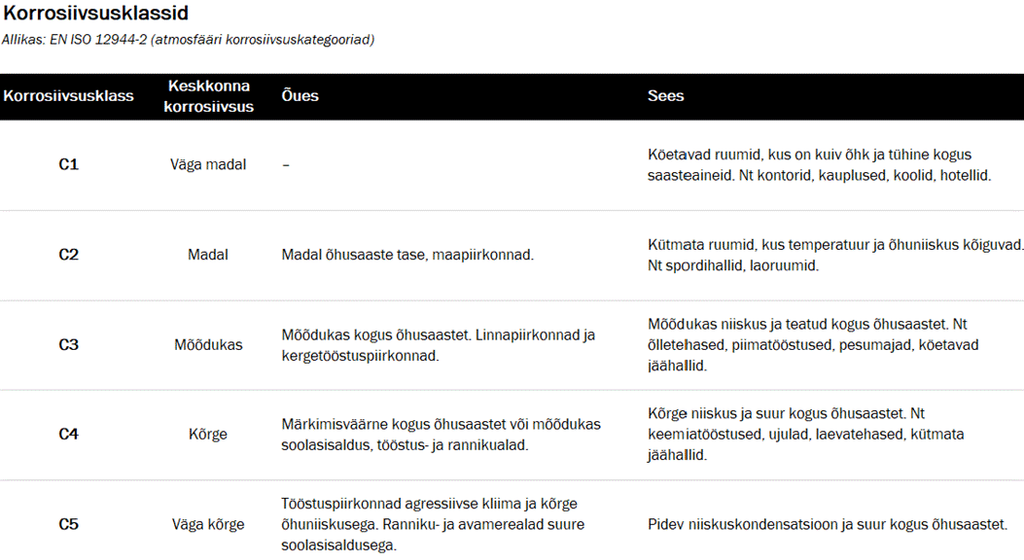
Korrosiooniklass näitab, kui agressiivne on keskkond, kus valgusti paikneb — arvestades õhuniiskust, saasteainete kogust ja soolasisaldust. Levinud standardite (nt ISO 12944 / IEC 60721 põhimõtete) alusel jaotatakse keskkonnad viide klassi, C1-st (väga madal) kuni C5-ni (väga kõrge). Õuetingimusi ja sisetingimusi hinnatakse eraldi. Alljärgnev tabel annab ülevaate, milline klass millisele keskkonnale vastab.

Tabel: korrosiivsusklassid C1–C5 vastavalt keskkonnale (õues ja sees).

Korrosiooniklasside kokkuvõte

  • C1 – väga madal: kuiv õhk ja tühine saasteainete kogus, peamiselt köetavad siseruumid (nt kontorid, kauplused, koolid).
  • C2 – madal: madal õhusaaste tase, tüüpiline maapiirkondadele ja kütmata siseruumidele.
  • C3 – mõõdukas: linnapiirkonnad ja kergetööstuspiirkonnad, mõõdukas õhusaaste.
  • C4 – kõrge: tööstus- ja rannikualad, märkimisväärne õhusaaste või mõõdukas soolasisaldus.
  • C5 – väga kõrge: tööstuspiirkonnad agressiivse kliimaga ning ranniku- ja avamerealad suure soolasisaldusega.

Kaugus merest kui otsustav tegur

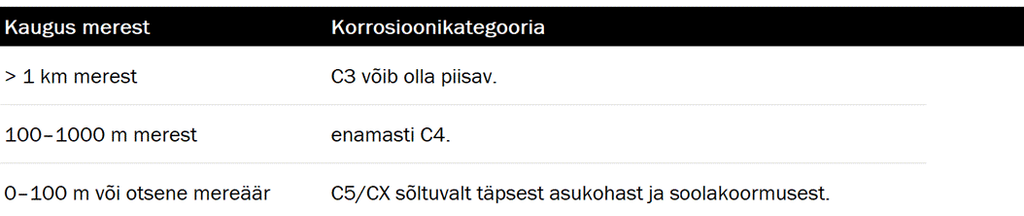
Rannikualadel ei ole korrosiooniklassi valik ainult üldine juhtnöör — kaugus merest muudab olukorra otseselt. Mida lähemal on valgusti veepiirile, seda intensiivsem on soolase udu ja niiskuse mõju metallosadele ning pinnakatetele. Üldised juhtnöörid on järgmised:

Juhtnöörid korrosiooniklassi valikuks sõltuvalt kaugusest merest

Tegelik vajalik klass sõltub siiski ka konkreetsest asukohast (nt valdavad tuuled, kaitstus hoonete või taimestiku poolt) ja soolakoormusest. Kahtluse korral tasub valida pigem kõrgem kaitseklass või konsulteerida spetsialistiga.

Millise valgusti valida?

Lähtudes eespool toodud juhtnööridest saab valgusti valikut suunata kaugusega merest ja keskkonna agressiivsusega. Alljärgnevalt tutvustame kuut meie valgustimudelit, mis sobivad erineva korrosioonikoormusega tingimustesse. Täpsed korrosioonikindluse sertifikaadid ja tehnilised andmed leiate iga toote tootelehelt või küsige meie müügimeeskonnalt.

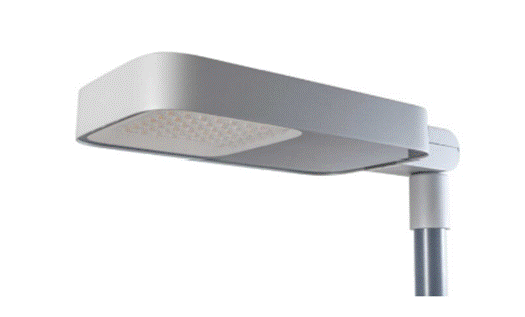
GEO

Klassikalise ja voolujoonelise disainiga tänavavalgusti, mis sobib hästi linna- ja elamurajoonide ning kergetööstuspiirkondade valgustamiseks — tüüpiliselt aladel, mis jäävad üle kilomeetri kaugusele merest ja mõõduka korrosioonikoormusega (C3-tüüpi tingimused).

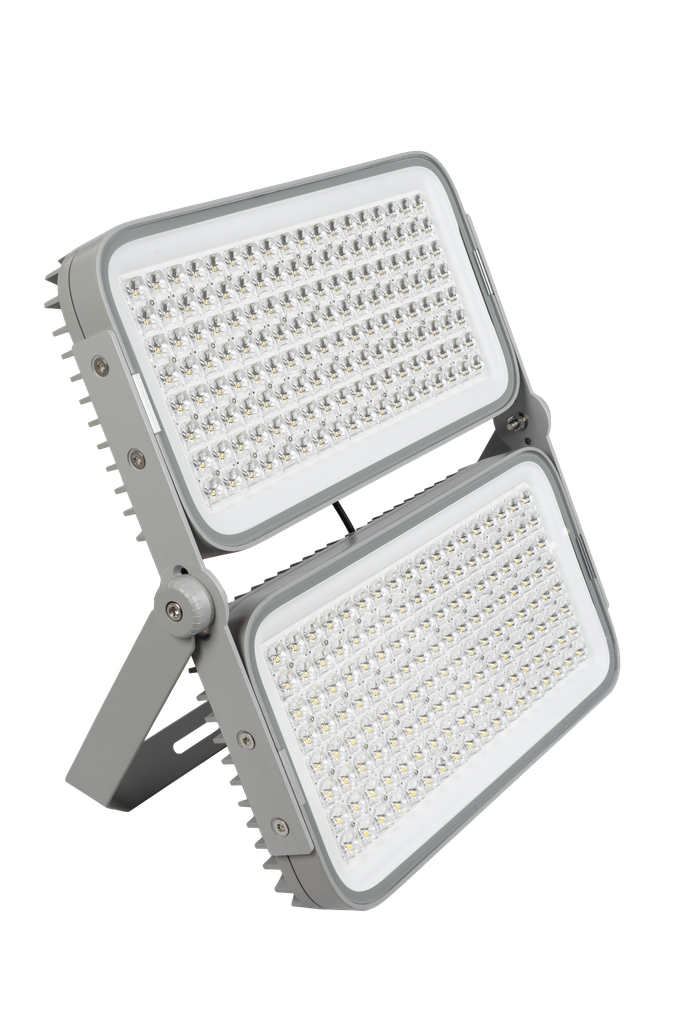
GEO FLOOD

Sama seeria prožektorvariant laiema valgusvälja ja suurema valgusvooguga — sobib väljakute, parklate ja fassaadide valgustamiseks aladel, kus keskkonnatingimused jäävad mõõdukast kuni märkimisväärse õhusaasteni (C3–C4-tüüpi tingimused).

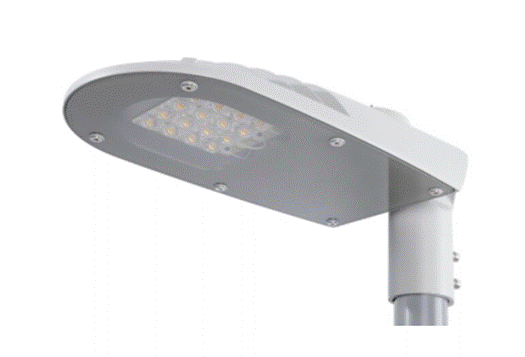
MOVO

Kompaktne ja aerodünaamilise kujuga LED-tänavavalgusti laiemaks kasutuseks linna- ja äärelinnapiirkondades, kus keskkonnatingimused on mõõdukad kuni pisut karmimad.

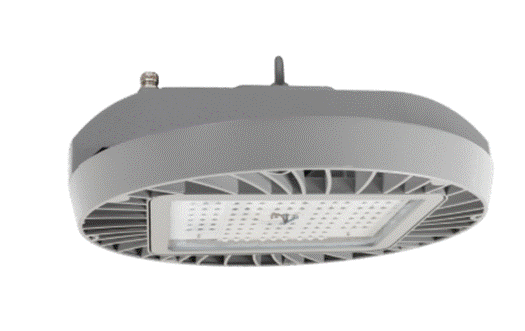
UKKO

Suure valgusvooguga high-bay tüüpi valgusti tugevdatud korpusega, mõeldud nõudlikumatesse tingimustesse — tööstus-, sadama- ja rannikualadele, kus õhus on rohkem niiskust ja soolaosakesi.

UKKO C5

UKKO erikorrosioonikindel versioon, ehitatud spetsiaalselt C5 keskkonnatingimuste jaoks — sobib otse mereäärde või kuni 100 m kaugusele veepiirist, kus soolase udu ja niiskuse koormus on kõige suurem.

VELA

Võimas prožektor suurte alade valgustamiseks, näiteks sadamad, tööstusalad ja avatud väljakud vahetus mereläheduses — sobib kõige agressiivsemate keskkondade jaoks kõrgendatud korrosioonikaitset nõudvatel objektidel.

Kokkuvõte

Korrosioonikindlus ei ole detail, mida rannikuprojektides tasub alahinnata. Vale valik tähendab kiiremat kulumist, kõrgemat omandi koguhinda ja lühemat kasutusiga. Lähtudes kaugusest merest ja kohalikest tingimustest aitame teil valida õige valgusti — võtke meiega ühendust ja leiame teie projektile sobiva lahenduse.